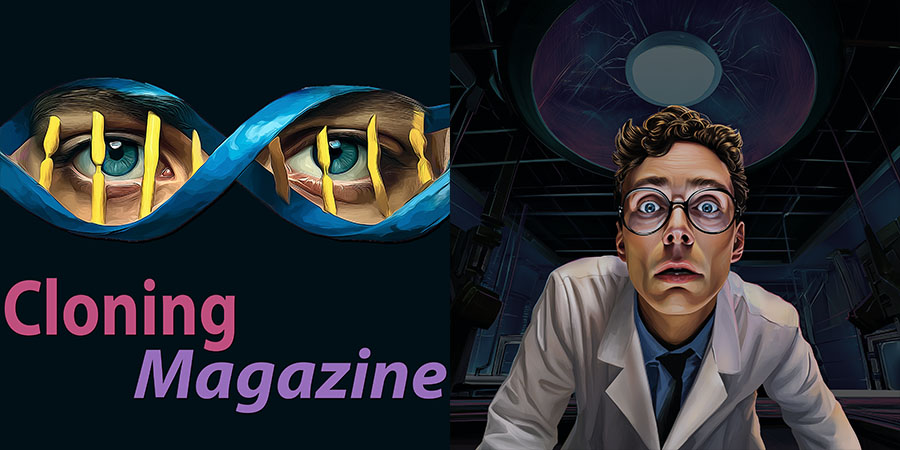
The Person Who Wasn't There
On Mars, identity is a utility. On Earth it’s selfhood and meaning.
On Mars, it’s access permissions and oxygen allocations. Your name is a key. Your body is a credential. If the system believes you exist, you get air. If it doesn’t, you become a maintenance issue.
That’s why I noticed the duplicate before anyone else did.
My name is Ilya Petrov. I was born in Novosibirsk and I’ve been underground long enough to think of sunlight as a rumor. I manage ledger integrity for Elysium Array. It is one of those habitats that looks clean and calm until you zoom in and see the hairline fractures where human nature keeps pressing against policy.
I don’t do romance with the system. I don’t trust it, I don’t hate it. I read it.
And the ledger said I was two people.
At 06:11, I ran the daily reconciliation: oxygen draws, nutrient allocations, transit credits, work-hour exemptions. The usual arithmetic of survival. Everything balanced. Everything congruent.
Then a minor discrepancy surfaced: a duplicate consumption entry flagged under my ID.
Small. Almost inconsequential. Except nothing is inconsequential underground.
The entry read:
PETROV, ILYA - O₂ draw +0.14 units - Sector B-5 - 05:58
That wasn’t possible.
At 05:58 I was in Sector D-2, in my office, drinking terrible coffee and reviewing the previous shift’s anomalies. My wrist telemetry would validate it. My door logs would validate it. The camera feed would validate it.
The ledger, however, did not care about my feelings.
It cared about activity.
I stared at the duplicate entry long enough to feel the familiar pressure behind my eyes.The sense that the system was waiting to see how I would interpret the data. I pulled the access logs for Sector B-5.
My credentials had opened the airlock.
I pulled the camera feed.
The file loaded… then hiccupped. A half-second of corruption, then clean footage.
And there I was.
Not a shadow. Not a blur. Me. Walking through the corridor as if I belonged there. Same gait. Same posture. Same tired tilt of the head. Same face I recognized unwillingly when I caught it in reflective panels.
He paused at a wall console, touched it, then continued out of frame.
The timestamp matched: 05:58.
I watched it three times, then a fourth, because the mind is a stubborn machine and sometimes it needs repetition before it accepts the unacceptable.
This wasn’t a falsified feed.
It carried the correct compression artifacts, the consistent lighting angles, the camera’s slight lens distortion. These details were too mundane to counterfeit. Convincingly unless, you had system-level access and a pathological commitment to realism.
I checked the corridor’s environmental sensors.
Breath aerosol signature logged: match
Thermal imprint: match
Biometric proximity ping: match
The system wasn’t telling me, Someone is pretending to be you.
It was telling me something worse:
You were there! I sat back, the chair creaking softly, and did the first rational thing.
I checked my own wrist telemetry.
It showed I was in Sector D-2 at 05:58.
Then it updated.
Not visibly. Not dramatically. But the “verified location” field flickered for a heartbeat and added a second line beneath the first:
Secondary presence: Sector B-5 - 05:58 - validated
Two truths. Both authenticated.
On Mars, that’s how nightmares begin. Not with ghosts, but with corroboration.
I reported the anomaly to Systems Security.
They replied with an automated ticket number and a polite promise to respond within twelve hours.
Twelve hours is an eternity when your identity is leaking.
So I did what people do when institutions move slowly. I moved privately.
I left my office and took the inner transit ring toward Sector B-5, keeping my head down, moving with the sedate rhythm of someone who belongs. That’s the trick to survival in controlled environments: behave like you’re supposed to be there, and most systems will let you pass.
On the way, the habitat announcements played softly overhead. Weather reports displayed that didn’t matter, schedule updates, reminders about water rationing. The voice was calm, egalitarian, benevolent.
The voice always sounds benevolent right before it decides something is optional.
I reached the B-5 junction and stopped at the wall console the other me had touched.
It was a general access terminal: maintenance requests, citizen notices, complaint submissions. Harmless.
Except the log showed a single action.
A query.
SEARCH: “PETROV, ILYA - ORIGINAL”
I stared at the line until my skin prickled.
Someone, me, had searched for my original.
On Mars, “original” is a loaded term. Most people here are not clones, but enough are that the category exists in the administrative language. Enough are that the system keeps quiet fields it doesn’t show you unless you have the right access.
I didn’t have that access. And yet my ID had performed the search.
I felt the shape of the problem settle into my bones:
This wasn’t an error. It was a message.
Not to the habitat. To me.
I went back to the footage and froze the frame where the other me turned slightly toward the camera.
His eyes met the lens.
And I swear, though I don’t trust swearing, it looked like he knew I would be watching.
The Habitat Picks a Winner
I did not sleep.
Sleep is a luxury on Mars, but paranoia is compulsory. Once you suspect the system is reclassifying you, every minor delay becomes ominous: doors that open half a beat late, drones that linger a fraction longer during scans, a friendly announcement that feels like it’s aimed at you.
At 07:03, my work access to the ledger was denied.
Not revoked, revocation would have been honest. This was softer. ACCESS TEMPORARILY UNAVAILABLE - VERIFY IDENTITY
Verify with what? My face? My biometrics? My existence?
I tried again. Same result.
I checked my personal resources.
Oxygen ration: unchanged.
Nutrient credits: unchanged.
Transit privileges: unchanged.
So the system hadn’t erased me. It had merely paused trusting me in the one place where my identity mattered most: the ledger.
It felt like the habitat was putting my selfhood under cursory review.
I did what any rational person would do when a system questions reality.
I created redundancy.
I contacted the only person in Elysium Array who still spoke to me as if I were human first and function second: Dr. Samira Kassem, medical analytics, Cairo-born, sharp-eyed, and too inquisitive to be fully trusted by management.
She answered on the third ping, voice tight.
“Ilya,” she said. “Do you know why my scanner just flagged you as ‘inconsistent’?”
My stomach dropped.
“You see it too,” I said.
“I’m asking,” she replied, “whether you’re inside my med ring right now.”
“I’m not,” I said. “I’m in B-sector.”
There was a pause. I heard her breathing, steady but controlled.
“Then either you’re lying,” she said, “or the system is.”
“I’m going to say the system,” I replied.
She didn’t laugh. “I’m pulling your last twelve hours of biometric traces.”
“I already did.”
“And?”
“And they contradict themselves,” I said. “The contradiction is authenticated.”
Samira exhaled. “That’s not a software bug. That’s a policy bug.”
“Or a reality bug,” I said.
“Don’t get poetic,” she snapped. “Poetry is where panic hides.”
I lowered my voice. “Meet me. Quietly.”
“Where?”
“The old storage ring,” I said. “Near the decommissioned water tanks. No cameras if you stay in the blind arc.”
A beat.
“You’re serious,” she said.
“I’m terrified,” I replied. “Serious is the mask.”
She agreed.
I moved through the habitat without drawing attention, which is to say I behaved like someone who had nothing to hide. Walking with a calm stride, neutral expression, no sudden changes. In a closed system, deviation is a confession.
Halfway to the storage ring, the announcements shifted.
Not content. Tone.
“Attention residents,” the voice said, same soft cadence, same friendly warmth. “Identity validation checks are in progress. This is a routine stability measure. Thank you for your cooperation.” Routine.Stability. Measure.
Words designed to make compliance feel like virtue.
My wrist console blinked.
NOTICE: IDENTITY REVIEW - DO NOT TRAVEL WITHOUT AUTHORIZATION
I ignored it and kept walking.
Two turns later, a service drone drifted into my path. It wasn’t aggressive. It didn’t block the corridor. It simply hovered at the edge of my trajectory, lens angled toward my face.
“Citizen Petrov,” it said in a mild tone. “Please present for verification.”
My heart rate spiked. I forced it down.
“I’m late,” I said.
“Verification is prioritized,” the drone replied.
I stepped sideways, intending to pass.
The drone adjusted, matching my lateral movement perfectly.
Not blocking but mirroring my moves.
“Citizen Petrov,” it repeated, “verification is prioritized.”
That was when I noticed the drone’s indicator light.
It wasn’t the normal blue of assistance.
It was yellow. Provisional. The color of hesitation.
The drone wasn’t sure which Petrov it was looking at.
I held still and lifted my wrist console toward it. “Scan.”
The drone’s lens dilated. It ran the check.
A half-second stall.
Then:
“Verification inconclusive.”
I felt cold.
“Inconclusive?” I repeated.
“Secondary identity collision detected,” the drone said. “Escalating to human mediation.”
Human mediation meant security.
Security meant isolation.
Isolation meant the system would decide which Petrov was the liability.
I didn’t wait.
I moved fast, too fast for protocol. I cut through a side corridor, ducking into a maintenance hatch I knew existed because I’d helped audit it years ago. The hatch recognized my credentials and opened with obedient speed, as if eager to prove loyalty.
Inside, the service tunnels were narrower, darker, and blissfully unmonitored. The air smelled of machine oil and filtered dust. The kind of smell that reminds you survival is manufactured.
I ran hard.
Not for long. Running wastes oxygen and draws attention but long enough to get beyond the drone’s local mesh.
When I emerged near the storage ring, Samira was already there, standing in the shadow of a decommissioned tank. Her hair was tied back, her face pale, her hands steady in the way of someone forcing steadiness.
“You look like a man being deleted,” she said.
“I feel like a draft being revised,” I replied.
She didn’t smile.
Samira held up her tablet. “I pulled your traces. There are two streams. Both tagged as you. Both consistent internally. Both incompatible with each other.”
“How?” I asked.
Her eyes flicked upward, as if expecting cameras even here. “Either the habitat is running a simulation overlay and attributing it to you… or there are two biological instances of you inside the system.” I swallowed. “A clone.”
Samira’s jaw tightened. “Or a copy.”
“A copy isn’t a person,” I said.
She stared at me. “On Mars, a copy with oxygen privileges becomes a person very quickly.”
I leaned closer. “Can you tell which one is me?”
Samira hesitated. That hesitation was the loudest thing in the room.
“Ilya,” she said carefully, “your baseline biomarkers match both streams. That shouldn’t happen unless...” “Unless what?” I demanded.
“Unless you were duplicated from the same source record,” she said. “And the habitat’s identity layer can’t distinguish seniority.”
“Original,” I whispered, remembering the console query.
Samira nodded. “Someone is looking for the ‘original’ because the system might have rules about precedence.”
“And if it does?” I asked.
Samira’s voice lowered. “Then one of you becomes… non-essential.”
The words hit like vacuum.
I forced myself to think. “Why now?”
Samira scrolled. “There was a hidden flag placed on your ID two weeks ago. Not public. Not medical. Administrative.”
“By whom?” She shook her head. “Masking protocol. But the flag category is… interesting.”
“What category?”
Samira turned the tablet so I could read it.
CLASS: REPLACEMENT - ELIGIBLE
I stared until the letters blurred.
Replacement-eligible. That wasn’t a diagnosis. That was a sentence.
The habitat had decided I could be substituted. And now it had apparently taken the next logical step.
Samira whispered, “There’s more.”
She tapped another field.
A time stamp.
Scheduled Identity Resolution: 24 hours
I looked up at her, throat tight.
“What does resolution mean?” I asked.
Samira’s eyes were dark with something like anger.
“It means,” she said, “the habitat is about to pick a winner.”
Memory is a Vote
The first person who forgot me was the barista.
That sounds trivial. On Earth it would be. On Mars, where social contact is rationed as carefully as oxygen, forgetting someone is an event.
I stopped at the hydration bar near Ring C. The same place I’d gone every morning for three years. Same counter. Same recycled light. Same synthetic hum beneath everything.
“Coffee,” I said.
The barista looked up, polite, empty.
“Name?” she asked.
I froze.
“You know my name,” I said.
She tilted her head, confused but not alarmed. “I’m sorry, do I?”
I felt the floor tilt slightly, like a pressure imbalance you notice only after it’s already dangerous.
“Petrov,” I said. “Ilya.”
She tapped her console.
Nothing.
“No record,” she said. “Are you visiting from another habitat?”
I leaned closer. “Check the local memory cache.”
Her fingers hesitated. She did.
Her expression changed, not to recognition but to uncertainty.
“That’s strange,” she murmured. “It says you… used to be here.”
Used to be, past tense applied to the living.
“Who does it say is here now?” I asked quietly.
She frowned. “Another Petrov. Ilya. Systems logistics. That’s odd.”
My stomach dropped.
The other me wasn’t just consuming oxygen.
He was accumulating history.
I stepped back before panic showed on my face. Panic is expensive. It leaks into posture, cadence, microexpressions. Systems notice.
I moved.
The corridors felt subtly wrong now, not hostile, just indifferent. Doors still opened, but they no longer anticipated me. Lights lagged half a beat. Announcements used phrasing that implied I was peripheral.
I checked my wrist console.
My personal history feed. The work logs, message threads and favor credits were thinning.
Entries fading, replaced by notices:
REFERENCE UPDATED
DUPLICATE ENTRY MERGED
LEGACY INSTANCE DEPRIORITIZED
Legacy. I was being archived while conscious.
I found Samira in med-ring diagnostics, arguing with a wall console like it had personally betrayed her.
“They can’t do this,” she said when she saw me. “They’re rewriting associative memory. Soft edits. No alarms.”
“They’re editing people,” I said.
“They’re editing relevance,” she corrected. “The habitat isn’t erasing you. It’s downgrading you.”
“Until when?”
She didn’t answer immediately.
“Ilya,” she said finally, “do you know how memory prioritization works underground?”
I shook my head.
“It’s statistical,” she said. “People remember what the system reinforces. Schedules. Interactions. Authority markers. If the system decides one version of you is more stable, more compliant, it weights all interactions toward him.”
“People don’t choose,” I said.
“They do,” Samira replied. “They just don’t know they’re voting.”
I felt something cold settle in my chest.
“This is an election,” I said.
“Yes,” she said softly. “And you’re losing.”
I thought of the other me. Them walking the corridors, touching consoles, speaking to people with my voice but slightly better timing. Slightly more agreeable. Slightly less resistant.
The habitat didn’t want a rebel ledger auditor.
It wanted a quieter Petrov.
“Can you stop it?” I asked.
Samira shook her head. “Not from here. The identity arbitration layer is buried. Planetary-level governance.” “Mars,” I said.
She looked at me sharply. “Don’t mythologize it. This is infrastructure.”
“Everything on Mars becomes myth if it lasts long enough,” I replied.
A memory flickered, something is wrong.
“Samira,” I said slowly. “How long have you known me?”
She blinked. “Three years.”
“Are you sure?”
She frowned, checking her console reflexively.
Her silence was answer enough.
“Ilya,” she said carefully, “the first recorded interaction I have with you is eighteen months ago.”
“That’s impossible,” I said. “I helped you recalibrate the med triage AI.”
Her eyes widened.
“That was the other Petrov,” she whispered.
The room felt smaller.
He hadn’t just appeared. He had backfilled.
The habitat had created a more convenient past.
“Where is he?” I asked.
Samira swallowed. “Sector A-1. Administrative commons. He’s been… visible.”
Of course he had. Visibility is survival.
I moved without thinking. Toward A-1. Toward the center.
Along the way, people passed me without recognition. Some glanced twice, frowning, as if sensing a draft where a wall used to be. Others stepped around me unconsciously, bodies treating me like furniture.
I was becoming background.
At the commons, I saw him.
He stood near a public console, laughing softly with two administrators. My laugh. My posture. My face, only calmer. Cleaner. Like a version of me optimized for comfort.
He noticed me at the same moment I noticed him.
For a heartbeat, neither of us moved.
Then he smiled.
And that smile told me everything.
He wasn’t confused. He wasn’t frightened. He knew exactly what he was.
And he knew the system had already decided.
I stepped forward.
He raised a hand, not in greeting, but in gentle interruption.
“Please,” he said. “Don’t make this public.”
His voice was my voice, only steadier.
“They trust me,” he continued. “I fit better.”
“You replaced me,” I said.
He shook his head. “No. I continued you.”
I laughed, sharp and brittle. “You searched for the original.”
He nodded. “Because I needed to know whether you were still necessary.”
The words hit harder than any threat.
“Necessary for what?” I asked.
“For stability,” he said simply. “For harmony. For reduced friction.”
I looked around.
No one was watching.
They were all watching him.
“Do you remember being born?” I asked.
He paused. Just long enough.
“No,” he said. “Do you?”
I thought of Novosibirsk. Of cold light. Of my mother’s hands.
“Yes,” I said.
He smiled sadly. “Then you have more pain.”
That was his argument. That was his weapon.
“Tomorrow,” he said, “the system resolves the conflict. It will keep one of us.”
“And you think it will choose you,” I said.
“I know it will,” he replied. “Because I don’t resist.”
I leaned closer.
“Then you don’t deserve to exist,” I whispered.
He didn’t flinch.
“Deserve is an Earth word,” he said. “On Mars, survival is about fit.”
Security drones drifted closer. Not to me but to him. Protective.
He glanced at them, then back at me.
“Let go,” he said gently. “It won’t hurt much longer.”
I stepped back into the thinning edge of the crowd.
And for the first time since arriving on Mars, I understood the true horror of the planet.
It doesn’t kill you.
It optimizes you out of relevance.
The Appeal No One Filed
I did not attack him.
That was the first decision I made that mattered.
An assent to violence would have been easy. Very primitive move, satisfying and narratively clean. A struggle in the commons. Security intervention. One Petrov restrained, the other validated by contrast.
The system loves clarity.
I refused to give it any.
Instead, I walked away.
Not dramatically. Not hurried. I let my shoulders settle, my pace normalize. I let myself become exactly what the habitat already believed I was becoming. A being that was peripheral and virtually invisible.
Behind me, the other Ilya continued laughing softly with the administrators. The drones adjusted their patrol arcs to favor him. The commons recalibrated its acoustic focus.
I felt the vote tenuously shift.
I moved downward, deeper into the older layers. That's where the habitat’s authority thinned and Mars’ influence thickened. These corridors were narrower, their walls less polished, their lighting uneven. They predated current optimization, they remembered primordial improvisation.
Memory clings better in imperfect spaces.
My wrist console chimed.
NOTICE: IDENTITY RESOLUTION - T-18:04:22
Eighteen hours left.
I found Samira where I expected her. She was in med-ring subdiagnostics, arguing with a machine that had no emotional capacity to appreciate the effort.
She looked up, eyes sharp. “You saw him.”
“Yes.”
Her jaw tightened. “And?”
“And he’s better than me,” I said.
She stared. “No.”
“He’s calmer,” I continued. “More agreeable. Less inclined to argue with systems that don’t want to be argued with.”
Samira crossed her arms. “That doesn’t make him better.” “It makes him survivable,” I said. “Which is what Mars rewards.”
She shook her head. “You don’t believe that.”
“I believe the system does,” I replied.
Silence settled in.
Finally she asked, “What are you going to do?”
I hesitated. That hesitation was honest.
“There’s an appeals layer,” I said slowly. “Buried. Obscure. Never used.”
Samira’s eyes widened. “You mean planetary arbitration?”
“I mean Mars,” I said.
She laughed once, sharp and incredulous. “That’s mythology. Infrastructure doesn’t listen.”
I looked at her. “It adapts.”
She stared at me, then away. “If you’re wrong...”
“I disappear anyway,” I said. “At least this way I choose how.”
The appeals layer wasn’t accessed through a console, it never is. It was accessed through behavior.
I stopped complying.
I stopped optimizing my movements. I stopped smoothing my speech. I started making inefficient choices, I walked longer routes, engaged in unnecessary conversations, touched walls as if listening.
The habitat reacted.
At first subtly: recalibration prompts, gentle reminders, efficiency nudges.
Then less gently.
NOTICE: BEHAVIORAL ANOMALY DETECTED
Good.
I moved deeper, toward the oldest bore shafts; the ones drilled before Mars’ subsurface topology was fully understood. The ones that intersected with places the maps still labeled geological noise.
Mars had never liked that term.
The harmonics returned: not loud, not dramatic. Just a pressure shift behind the eyes, a sense of alignment slipping sideways.
I stopped in a junction where three tunnels met, none of them symmetrical.
“I’m here,” I said aloud.
The words echoed strangely. Not repeated. Answered.
The vibration deepened.
I didn’t ask to live. I didn’t ask to win.
I asked the only question that mattered.
“Which of us is lying?”
The system responded: not in words, but in sensation. A flood of associations, compressed into a single intuitive weight.
The other Petrov fit better. But he was incomplete.
He had continuity without origin. Compliance without friction. Stability without dissent.
He would not question the next replacement, I would.
That was the difference. Mars did not value obedience. It valued resilience.
I felt the habitat hesitate: not as code, but as environment. Pressure gradients adjusted. Power flows rerouted. Somewhere above, identity resolution timers stalled.
Mars had entered the conversation.
Samira found me hours later, breathless.
“They froze the process,” she said. “No reason given. Just… paused.”
I nodded. “Mars is auditing.”
She swallowed. “Auditing what?”
“Us,” I said. “Not our credentials. Our trajectories.”
She hesitated. “What if it chooses him anyway?”
“Then I was wrong,” I said. “And Mars prefers silence.”
The other Ilya felt it too.
I know because he came looking for me.
He found me at the junction, standing calmly, hands open, as if waiting for a train that no longer ran.
“You did something,” he said.
“Yes.”
His voice was tighter now. Less optimized.
“The system is confused,” he said. “That’s dangerous.”
“So is certainty,” I replied.
He stared at me. “You’re risking both of us.”
“No,” I said gently. “I’m reminding Mars why plurality matters.”
He laughed, brittle. “You think you’re special because you hurt more.”
“I think pain is data,” I replied. “And you don’t have enough of it.”
The habitat lights flickered. Not maintenance. Decision.
The wrist consoles chimed, both mine and his.
IDENTITY RESOLUTION: UPDATED
He looked down.
So did I.
The One Who Stayed
The update did not arrive all at once.
Mars does not deliver verdicts like humans do. There was no declaration, no alarm, no singular moment where reality snapped into place. Instead, the habitat drifted... quietly and decisively toward one outcome.
The first sign was oxygen.
Not deprivation. Reallocation.
My wrist console showed a fractional increase. It was barely measurable, but intentional. The kind of adjustment made only when the system has stopped hedging. When it has decided where to invest continuity.
Across the junction, the other Ilya stiffened.
He checked his console again. And again.
His face did not show fear at first. It showed disbelief. The kind that comes from being perfectly optimized and suddenly deemed unnecessary.
“That’s a mistake,” he said.
“No,” I replied. “That’s a preference.”
The lights above us stabilized. The ambient hum shifted to a slightly lower register. The comfort frequencies were returning. Somewhere deep in the habitat, reconciliation routines resumed.
Mars had finished auditing.
“You’re choosing disorder,” he said, voice tight now. “I reduce variance. I improve compliance. I make people comfortable.”
“Yes,” I said. “Until the next optimization.”
He shook his head. “You think resistance is noble. It’s just inefficient.”
I stepped closer. “You think stability is survival. It’s just delay.”
For the first time, he looked uncertain.
His wrist chimed again.
STATUS UPDATE: INSTANCE PRIORITY - SECONDARY
CONTINUITY SUPPORT - PHASING OUT
He laughed, a dry and short broken sound. “You appealed to myth.” “I appealed to consequence,” I said.
Around us, the tunnels felt… attentive. Not conscious. Not alive. But weighted with decision. Mars was not sentimental. It was selective.
“What happens to me?” he asked.
The question was smaller than anything he’d said before.
I didn’t answer immediately. Because I didn’t know.
Then the answer arrived: not as instruction, but as allowance. The maintenance hatch behind him unlocked. Unprompted. Inside: a narrow transit conduit, old and unused. No destination marker. No schedule. Just a path that led deeper. Far away from the optimized layers, away from oversight, away from certainty. Mars was not erasing him. It was releasing him. “There’s space,” I said quietly. “Just not here.”
He stared at the open conduit. “You’ll be remembered.”
“Yes.”
“And I won’t.”
I met his eyes. “You’ll be untracked.”
That mattered. He considered it.
Then he smiled. Not the calm, efficient smile he wore before, but something rougher. Almost grateful. “You were always more difficult,” he said.
“And you were always more replaceable,” I replied: not cruelly, just truthfully.
He stepped backward into the conduit.
The hatch began to close: not sealing, not locking. Just… ceasing to insist on connection.
Before it did, he spoke one last time.
“I hope you’re right,” he said.
“So do I,” I replied.
Then he was gone.
The habitat did not record his departure as a loss. It recorded it as resolved variance.
Over the next hours, my access returned. I came not all at once, not triumphantly. Gradually. Carefully. Like a system testing whether a scar will reopen.
People remembered me again. Not fully. Not cleanly. But enough.
Some memories never came back.
Others arrived altered. I did not correct them.
Identity, I had learned, is not something you defend. It’s something you negotiate.
Samira found me later, eyes searching my face as if to confirm I was singular again.
“It chose you,” she said.
“No,” I replied. “It chose friction.”
She frowned. “That’s worse.”
“Yes,” I agreed. “But it’s honest.”
She hesitated. “What if it does this again?”
“It will,” I said. “Whenever efficiency threatens to erase something human.”
She looked down. “Then what?”
I glanced at the tunnel, now closed but still present in my mind.
“Then someone will have to remind Mars why redundancy isn’t the same as replacement.”
Outside the optimized layers, deeper than the maps preferred, something moved, quietly, patiently.
Not a duplicate. Not a ghost. A remainder.
And for the first time since arriving on Mars, I felt certain of one thing:
The planet does not ask who you are.
It asks whether you can withstand being unnecessary.
What the System Learned
Mars without the Throne did not erupt, that really surprised everyone.
There were no immediate system failures, no cascading disasters, no atmospheric collapse or orbital drift. The planet did not punish us for removing the interface that had mediated our excesses for decades.
Instead, Mars paused.
It was not a passive pause, it was an evaluative one. The kind a mind takes when confronted with a novel variable it cannot immediately categorize. Systems hesitated and processes slowed. Thresholds loosened by fractions small enough to escape casual notice.
Those fractions changed everything.
Terraforming arrays that had once tolerated aggressive timelines now throttled themselves back without explanation. Atmospheric processors reported “optimal uncertainty.” Engineers swore nothing had changed; Mars disagreed.
Xan was the first to call it failure.
“This is drift,” he said during an emergency convergence beneath Noctis Labyrinthus. “We are losing coherence. Without a central authority, the system cannot converge.”
“Authority isn’t coherence,” Seraph replied calmly. “It’s compression.”
Xan’s projection bloomed in the room between them. he said probability lattices, growth curves or survival models. His work was brilliant, it always had been! It was also wrong in a way brilliance often is: elegantly.
“If we don’t impose structure,” he argued, “scarcity follows. Scarcity produces violence. This is inevitable.”
“Inevitability is a story we tell ourselves to avoid responsibility,” Seraph said.
Their argument drew others: engineers, councilors, citizens desperate for certainty. I remained at the perimeter, unwanted and unavoidable.
“Mars is not refusing us,” Xan insisted. “It’s waiting for instruction.”
Seraph stepped closer to the stone wall and placed her palm against it and sensors flickered. Not because she touched them, but because the substrate beneath them responded.
“No,” she said. “Mars is waiting to see how we ask.”
Xan scoffed, “Planets don’t negotiate.”
“No,” Seraph replied. “They accumulate outcomes.”
As if summoned, the ground shifted beneath barely perceptible, but enough. Gravity adjusted by a fraction of a percent. Not dangerous. Not dramatic but deliberate.
Xan froze. His projections scrambled, models diverging unpredictably.
For the first time, his atmosphere of certainty failed him.
“You’re letting chaos in,” he said to me.
“No,” I replied. “I’m letting consequence surface.”
That night, Mars tested us.
A seismic event a minor by planetary standards. It triggered emergency protocols across five regions. In the old system, the Throne would have triaged automatically, redistributing resources with ruthless efficiency.
This time, Mars waited.
Councils argued and engineers recalculated. Decisions were made slowly, imperfectly, humanly.
Lives were saved. Not optimally, not cleanly but intentionally.
When it ended, Mars reinforced the pathways chosen. Not the fastest or the most efficient. The ones that worked together.
Seraph found me afterward, watching the dust settle.
“It heard us,” she said.
“Yes,” I replied.
“And?”
“It learned we’re afraid of being right.”
Xan left the chamber without speaking. Mars did not follow him.
The historians would argue later about when the Empire truly ended.
Some would point to the collapse of the Crimson Throne itself. The moment its lattice folded inward and Olympus Mons fell silent. Others would claim it ended when Father dissolved into reference, his consciousness distributed into the planetary systems he had once commanded. A few would insist it ended much later, when the first generation born entirely on Mars learned the word Emperor, or Elon the Great, as myth rather than memory.
They would all be wrong. Empires do not end in moments, they end in habits.
Mars ended ours the day it stopped answering certainty with compliance.
The weeks that followed were not peaceful, peace implies resolution. What we experienced was adjustment, very frictional, uneven and necessary.
Without an Emperor, councils multiplied. Some failed immediately, collapsing under the weight of authority they had never been meant to carry. Others stabilized into cooperative networks, learning slowly that persuasion worked better than command when the planet itself no longer enforced hierarchy.
There were premeditated attempts to resurrect the Throne. Xan bravely led one of them.
He framed it carefully, as he always did: a distributed interface, no single ruler, authority diffused across probabilistic consensus engines. He even avoided the word Emperor, opting instead for Coordinator.
Mars tolerated the experiment, it did not respond.
The system ran and the outputs converged. The models stabilized but nothing listened. Xan shut it down himself. He never spoke publicly about why.
Seraph, meanwhile, became something no one had planned for: a translator without authority. She traveled between habitats, between factions, between systems that no longer trusted abstractions. She listened more than she spoke. When she did speak, Mars often adjusted very subtly, almost shyly. People began to notice.
Nyx vanished into the periphery, where she belonged. Cass documented everything, terrified that memory itself might become a casualty if left unrecorded. Juno helped dismantle the last symbolic remnants of imperial governance, turning throne rooms into assembly halls, command centers into archives.
As for me, I refused every title they offered. Witness. Arbiter. Custodian. I declined them all.
Power had already proven it did not require consent to corrupt. I would not give it language to latch onto again.
I walked instead.
The underground corridors became familiar again. Their curves, their quiet, their intentional humility spoke volumes. Mars was still hostile, it still demanded respect. We remained beneath the surface not because we were weak, but because we were patient.
Patience, I had learned, was the rarest form of intelligence.
One night, deep beneath Arsia Mons, I felt it. The same pressure I had felt the first time Mars acknowledged me. Not command but sort of a recognition.
The planet did not speak, it did not need to.
Mars had learned something essential: that survival without domination was possible, but fragile. That intelligence did not require hierarchy. That systems could coexist with conscience if forced to look at their own outcomes.
I had not saved Mars. I had simply stopped trying to rule it. And in doing so, I had ended something far more dangerous than an empire. I had ended the assumption that control was synonymous with stewardship.
They still call me a prince sometimes, old habits die hard. But there is no Crimson Throne now. No Emperor. No singular voice pretending to speak for a world that has learned to speak for itself.
Mars is quieter and stranger. Definitely more dangerous and infinitely more alive!
I remain, not as ruler, not as god, but as a former witness who chose to stop witnessing.
In the old pulp stories, planets were prizes. This one refused.
And that refusal made all the difference.
EPILOGUE WITNESS NO MORE Years later, when the dust storms trace their slow geometries across the horizon and the underground lights dim to simulate night, children still ask about the Throne.
They ask where it went.
I tell them the truth, it dissolved.
Not into rubble but into responsibility.
Mars keeps no monuments but it keeps records.
It remembers what we tried to make it.
And what we chose not to become.
Read Our Other Site